Workout
20-Minute No-Jump Cardio Circuit
An original 20-minute standing cardio block example with no jumps, a gentle warm-up and rest. Adjust effort and allow more preparation time when needed.
Do this first
Start This Workout
This original 20-minute block arrangement uses familiar standing steps without jumping. It schedules six minutes for gentle preparation, 9 for main work, 3 for an easy reset and two for downshifting. Allow more preparation or recovery when needed; the title is not a deadline or proof that the effort is suitable.
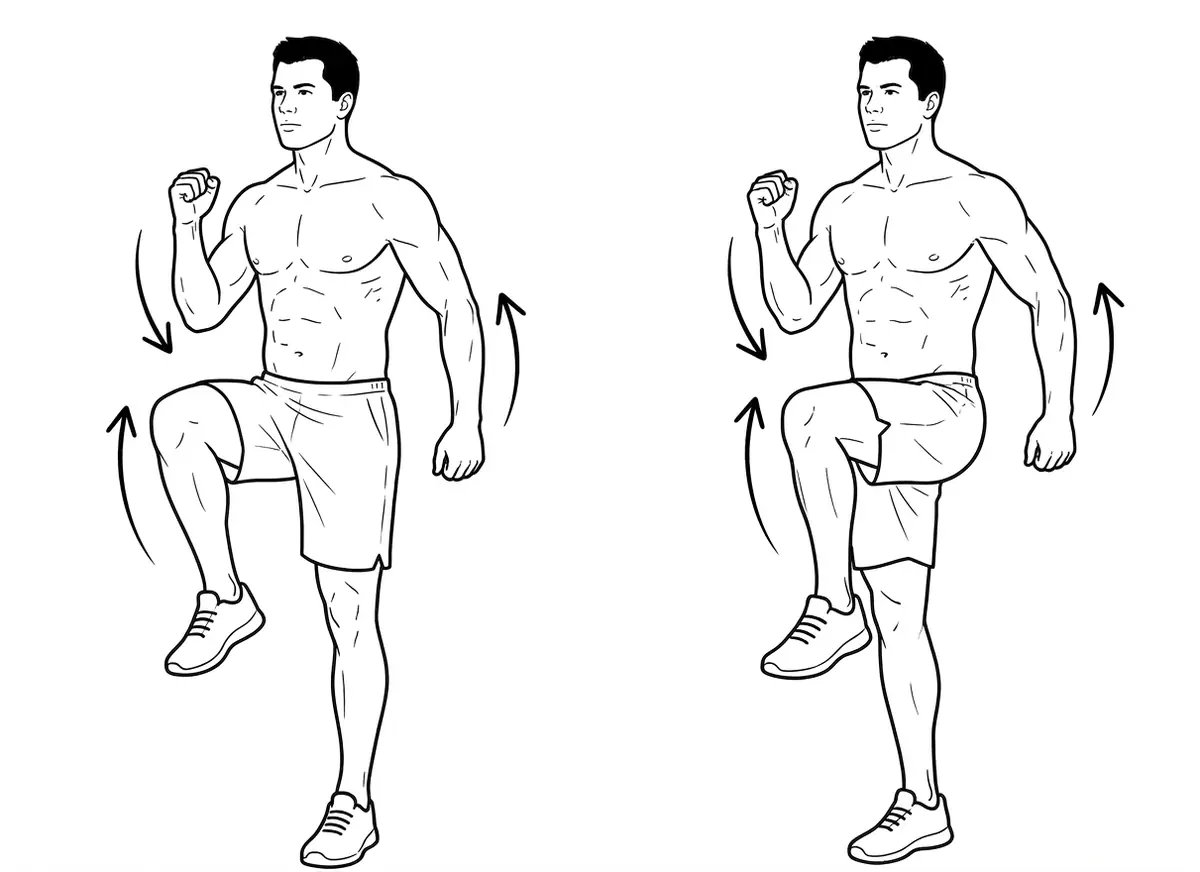
- High Knees MarchBegin at an easy pace with comfortable range; repeat suitable familiar movements as needed during gentle preparation.
- Standing Knee RaiseBegin at an easy pace with comfortable range; repeat suitable familiar movements as needed during gentle preparation.
- Step JackBegin at an easy pace with comfortable range; repeat suitable familiar movements as needed during gentle preparation.
Begin gently with familiar standing versions, comfortable knee height and arm travel. Cycle gently as appropriate; allow longer preparation if needed. These are original block examples, not the NHS routine or a required repetition pace.
- Step JackChoose manageable work and rest; slow or simplify suitable movement or rest if effort is more than intended.
- Standing Knee RaiseChoose manageable work and rest; slow or simplify suitable movement or rest if effort is more than intended.
- High Knees MarchChoose manageable work and rest; slow or simplify suitable movement or rest if effort is more than intended.
- Standing Knee RaiseChoose manageable work and rest; slow or simplify suitable movement or rest if effort is more than intended.
Printed work/rest cues are examples, not targets to finish through discomfort. Use comfortable range, check effort during movement and take additional rest as needed.
- High Knees MarchUse a comfortable easy movement or rest; stop immediately for pain or becoming unwell.
- Standing Knee RaiseUse a comfortable easy movement or rest; stop immediately for pain or becoming unwell.
Use an easy, comfortable standing version or rest. No floor transition is required. Stop immediately for pain or becoming unwell.
- Slow breathingEase down only if well enough; keep breathing normally. Record the actual response, and stop for symptoms.
- Easy walkEase down only if well enough; keep breathing normally. Record the actual response, and stop for symptoms.
- Training noteEase down only if well enough; keep breathing normally. Record the actual response, and stop for symptoms.
Ease the pace down only when well enough to do so; keep breathing normally and record the actual response. Symptoms requiring a stop are separate from an ordinary cooldown.
Adjust The Session
Decision guide
Use This Page When It Fits Today
Generally healthy adults using familiar standing movements that fit the actual room and effort today.
Resolve path concerns, begin gently and allow appropriate preparation before main work.
Leave the exercise out if the movement or setup is uncertain; stop immediately for pain or becoming unwell.
Use the companion no-jump cardio guide to distinguish movement paths, effort during work and sound concerns.
Practical brief
Use This Page In Practice
Generally healthy adults using familiar standing movements that fit the actual room and effort today.
Warm-up: High Knees March, Standing Knee Raise, Step Jack. Main block: Step Jack, Standing Knee Raise, High Knees March. Keep the first round easier than the written plan feels.
Starting main work before adequate gentle preparation. Increasing pace or arm travel beyond comfortable control, or continuing into an unresolved obstacle. Assuming no jumping guarantees easy effort, silence or exercise suitability.
Shorten suitable work periods or add rest when effort is more than intended; keep actual pauses visible. Use a familiar comfortable standing option that fits; a smaller movement must still remain controlled. Repeat a suitable version with preparation, work and rest recorded. Consider one manageable change only when control and response support it; stop for pain or becoming unwell.
Review the familiar stepping version if the movement itself needs clarification.
Step JackUncertain movement or setup, uncontrolled effort, pain or becoming unwell.
No-jump cardio guideCheck effort during suitable work rather than assuming a no-jump label makes it easy.
Talk test and response recordBest For
Choose familiar standing movements, check their paths and keep preparation, work and rest appropriate today.
Before You Start
General adult education. Stop immediately if you feel any pain or become unwell. Get appropriate professional advice when suitability is uncertain or relevant health circumstances apply; severe or urgent symptoms require local emergency help.
Real-world check
Field Notes
Record actual preparation, work and rest, the movement version, speech observation during work and any separate sound or space concern.
The longer main block leaves nine scheduled minutes for familiar standing work; extra duration is optional, not evidence of a better session.
Resolve the floor and path, then prepare gently using familiar standing versions; allow longer if needed.
If effort is more than intended, slow or simplify suitable work or rest. Resolve an obstacle separately.
Stop immediately if you feel any pain or become unwell. A missed warm-up must be addressed before main work; it is not a physiological stop signal.
After You Finish
Repeat only a suitable controlled version after reviewing actual preparation, work and rest.
Repeat a suitable version with preparation, work and rest recorded. Consider one manageable change only when control and response support it; stop for pain or becoming unwell.
Swap workouts when room, noise, or equipment friction is bigger than effort. Use a familiar comfortable standing option that fits; a smaller movement must still remain controlled.
Log one line: An adult plans these 20 minutes of blocks but takes longer to prepare gently, shortens later work and records the actual duration and speech observation during movement.
Prepare before main work
Resolve floor and movement-path concerns first. Begin gently with familiar standing options. NHS’s particular warm-up routine says at least six minutes and longer if needed; this block example is not that routine or an NHS prescription.
Standing work and recovery
The longer main block leaves nine scheduled minutes for familiar standing work; extra duration is optional, not evidence of a better session. Use a comfortable knee height and arm range. No jumping does not guarantee moderate effort or silence. Reduce pace, simplify movement or rest if effort is more than intended; an obstacle requires a path change, not just fewer minutes.
Actual timing and the next repeat
Include actual pauses and changes in the record. If preparation takes longer, allow extra time or shorten suitable later work rather than rushing. Repeat only a version that remains suitable and controlled; there is no mandatory two-session progression rule.
Compare before switching
20-Minute No-Jump Cardio Circuit vs Step Jack
You already know suitable standing movements and want to understand the scheduled blocks.
The stepping version itself is unfamiliar; review its movement guidance before adding it to a session.
Step JackUse this page for an original timed arrangement of standing work and recovery. Actual duration can differ.
Reader questions
FAQ
A beginner label does not establish suitability. Choose familiar controlled options, begin gently and adjust work/rest to the actual response. Get advice if suitability or relevant health circumstances are uncertain.
The standing blocks do not require exercise equipment. Still check the actual floor, foot and arm paths, return and access route; no-equipment does not mean no setup.
Avoiding jump landings does not guarantee silence. Foot contact and the building matter. Respect the real shared setting and choose an appropriate option, time or location; a mat is not a soundproofing guarantee.
Record actual preparation, work and rest, the familiar movement version and response during work. Repeat only when the version remains suitable; do not automatically progress after two sessions or repeat through symptoms.
Source And Safety Notes
What the source informs: NHS provides named warm-up options, timing for its particular routine and exercise safety advice. Its guidance says to stop immediately for pain or becoming unwell.
What HomeFit Atlas decides: These standing blocks and interval cues are original examples, not an NHS programme or personalised prescription. The companion guide explains CDC’s talk-test rule of thumb and includes the sources.
Image fit: close. The image shows a standing or compact low-impact movement pattern used in this cardio workout family.
General adult education. Stop immediately if you feel any pain or become unwell. Get appropriate professional advice when suitability is uncertain or relevant health circumstances apply; severe or urgent symptoms require local emergency help.