Workout
20-Minute No-Equipment Strength Ladder
20-Minute No-Equipment Strength Ladder is a 20-minute beginner strength workout for small spaces using none, with clear blocks and substitutions.
Do this first
Start This Workout
20-Minute No-Equipment Strength Ladder is best for readers who want bodyweight reps that climb gradually without rushing. It uses none in small spaces with low impact. Keep the first round easy enough to repeat with clean breathing.
- Standing knee raise30 seconds easy pace, then move to the next drill.
- Step jack30 seconds easy pace, then move to the next drill.
- Hip hinge drill30 seconds easy pace, then move to the next drill.
Start gently; block times include movement, rest, and transitions.
- Slow Bodyweight Squat40 seconds work, 20 seconds rest.
- Wall Push-Up8 controlled reps, then 20 seconds rest.
- Glute Bridge40 seconds work, 20 seconds rest.
- Dead Bug8 controlled reps, then 20 seconds rest.
Use smooth reps and rest before technique gets messy. Stop when the block time ends.
- Glute BridgeUse up to 75 seconds for this step, including rests.
- Dead BugUse up to 75 seconds for this step, including rests.
- Reverse LungeUse up to 75 seconds for this step, including rests.
- Step JackUse up to 75 seconds for this step, including rests.
Use the remaining time for an easy repeat; rest whenever needed.
- Slow breathingUse up to 40 seconds for this step, including rests.
- Easy walkUse up to 40 seconds for this step, including rests.
- Training noteUse up to 40 seconds for this step, including rests.
Ease down and record one adjustment for next time.
Adjust The Session
Decision guide
Use This Page When It Fits Today
20-Minute No-Equipment Strength Ladder fits a beginner reader who has 20 minutes, none ready, and enough small space for strength work.
Clear the room, run the warm-up block, then check slow bodyweight squat before the main interval starts.
Skip this workout today if low impact, none setup, or the 20-minute length would make the session rushed.
Open Slow Bodyweight Squat if the first movement is unfamiliar, or repeat this page once before choosing a harder workout.
Practical brief
Use This Page In Practice
20-Minute No-Equipment Strength Ladder fits a beginner reader who has 20 minutes, none ready, and enough small space for strength work.
Warm-up: Standing knee raise, Step jack, Hip hinge drill. Main block: Slow Bodyweight Squat, Wall Push-Up, Glute Bridge. Keep the first round easier than the written plan feels.
Skipping the warm-up before 20-minute no-equipment strength ladder because the session happens at home. Turning low strength work into rushed movement that no longer fits small space. Adding load or speed to slow bodyweight squat before the first round of 20-minute no-equipment strength ladder feels controlled.
Cut each 20-minute no-equipment strength ladder work interval in half and keep the same rest. Use chair-supported squats, wall push-ups, and dead bugs when none or low impact is the blocker. Repeat 20-minute no-equipment strength ladder twice before increasing duration, load, or work interval length.
Review Slow Bodyweight Squat because it is the first main movement readers must control before repeating this workout.
Slow Bodyweight Squat20-Minute No-Equipment Strength Ladder fails today when 20 minutes, none setup, or low impact becomes the main work instead of the training.
Three-Week Hotel Room Workout PlanUse this when 20-Minute No-Equipment Strength Ladder asks for more duration, load, or coordination than today can repeat cleanly.
18-Minute One-Mat Full BodyBest For
20-Minute No-Equipment Strength Ladder fits readers who want bodyweight reps that climb gradually without rushing without guessing whether the day allows none or low impact.
Before You Start
Prepare 20-Minute No-Equipment Strength Ladder by making the warm-up boring enough to repeat and the main block simple enough to finish.
Real-world check
Field Notes
Write one line after 20-Minute No-Equipment Strength Ladder: which block felt repeatable, what changed, and whether Workout Finder should be opened before repeating.
20-Minute No-Equipment Strength Ladder is worth doing when 20-minute no-equipment strength ladder is best for readers who want bodyweight reps that climb gradually without rushing. it uses none in small spaces with low impact. keep the first round easy enough to repeat with clean breathing. The practical question is whether the first block fits the room today.
Start with Standing knee raise from Warm-up and keep the first round easier than the written plan feels.
If slow bodyweight squat creates friction, use this change before abandoning the workout: Cut each 20-minute no-equipment strength ladder work interval in half and keep the same rest.
Stop the session when this pattern appears: Skipping the warm-up before 20-minute no-equipment strength ladder because the session happens at home. That is a better signal than finishing every minute.
After You Finish
Repeat this workout when the final block still feels messy or rushed.
Repeat 20-minute no-equipment strength ladder twice before increasing duration, load, or work interval length.
Swap workouts when room, noise, or equipment friction is bigger than effort. Use chair-supported squats, wall push-ups, and dead bugs when none or low impact is the blocker.
Log one line: A reader chooses 20-minute no-equipment strength ladder through the finder, completes the first two blocks, and saves the movement page that felt least familiar.
Pacing rule
For beginner pacing, keep the first round at a level where breathing stays steady and the last block is still readable.
Swap before starting
Use chair-supported squats, wall push-ups, and dead bugs when the original setup would add noise, equipment friction, or extra room clearing.
When this workout is a poor fit
Choose a different session when low impact, none setup, or 20 minutes is the blocker.
Specific use case
20-Minute No-Equipment Strength Ladder is built for a kitchen corner with a stable counter: 20 protected minutes, none already nearby, and unclear first-rep control solved before the warm-up.
Exact failure point
Use a fallback when slow bodyweight squat needs extra coaching, low impact changes the room, or none setup interrupts the main block.
Best replacement route
20-Minute No-Equipment Strength Ladder should use the lower-impact route when it almost fits: preserve the strength goal, reduce one constraint, and keep the next page specific rather than broad.
At-a-glance decision
20-Minute No-Equipment Strength Ladder is the right page when the reader has about 20 minutes, wants strength work, and can use none without rearranging the room.
Poor fit today
Move away from 20-minute no-equipment strength ladder when the constraint is time, noise, equipment setup, unstable space, or recovery rather than effort.
Real home scenario
20-Minute No-Equipment Strength Ladder scenario: A reader has 20 minutes in a small living room, with none available and no time to rearrange the room. 20-Minute No-Equipment Strength Ladder is useful only if the warm-up and first movement can start without changing that setup.
Best first version
20-Minute No-Equipment Strength Ladder should start with the easiest version that still matches the page promise. If setup takes longer than the first work block, reduce equipment, range, or duration before changing the whole plan.
What this page decides
20-Minute No-Equipment Strength Ladder decides whether the current home constraint is realistic today. It should make the next action smaller: start the first block, practice the first movement, repeat the first week, or switch to a more realistic related page.
How to make it easier
20-Minute No-Equipment Strength Ladder gets easier by changing one lever first: shorter time, smaller range, lower impact, lighter equipment, or more rest. Changing one lever keeps the result readable and makes the next repeat easier to judge.
Next-page logic
20-Minute No-Equipment Strength Ladder next step: 20-Minute No-Equipment Strength Ladder should send you to the slow bodyweight squat setup only if that move is unfamiliar. The related links point to the next practical decision, so the next click moves from choice to action without opening several unrelated pages.
Compare before switching
20-Minute No-Equipment Strength Ladder vs Slow Bodyweight Squat
20-Minute No-Equipment Strength Ladder fits a beginner reader who has 20 minutes, none ready, and enough small space for strength work.
Choose Slow Bodyweight Squat when the reader needs a narrower, easier, quieter, or more specific next step before returning to 20-Minute No-Equipment Strength Ladder.
Slow Bodyweight Squat20-Minute No-Equipment Strength Ladder is better when the reader wants the full decision on this page, including setup, pacing, next step, and the reason it fits today.
Reader questions
FAQ
20-Minute No-Equipment Strength Ladder is a better beginner choice when the first round stays controlled and the 20-minute length does not crowd the day. If that feels too much, shorten the work intervals and keep the same rest.
20-Minute No-Equipment Strength Ladder already works without equipment, so the main check is room, pace, and impact rather than gear. Keep the easiest movement version until the final block still feels repeatable.
20-Minute No-Equipment Strength Ladder is not the quietest choice. Use the comparison link or filter for quiet, low-impact sessions when floor noise matters more than intensity.
Repeat 20-Minute No-Equipment Strength Ladder once if the final block felt messy. Move to a related program only after the same version feels repeatable without changing room setup or equipment mid-session.
Source And Safety Notes
What the source informs: 20-Minute No-Equipment Strength Ladder uses Physical Activity Guidelines for Americans for adult activity framing around repeatable strength training inside a realistic home session.
What HomeFit Atlas decides: 20-Minute No-Equipment Strength Ladder concrete route is where HomeFit Atlas decides: 20 minutes, none setup, Slow Bodyweight Squat handoff, and 20-Minute No-Equipment Strength Ladder fails today when 20 minutes, none setup, or low impact becomes the main work instead of the training..
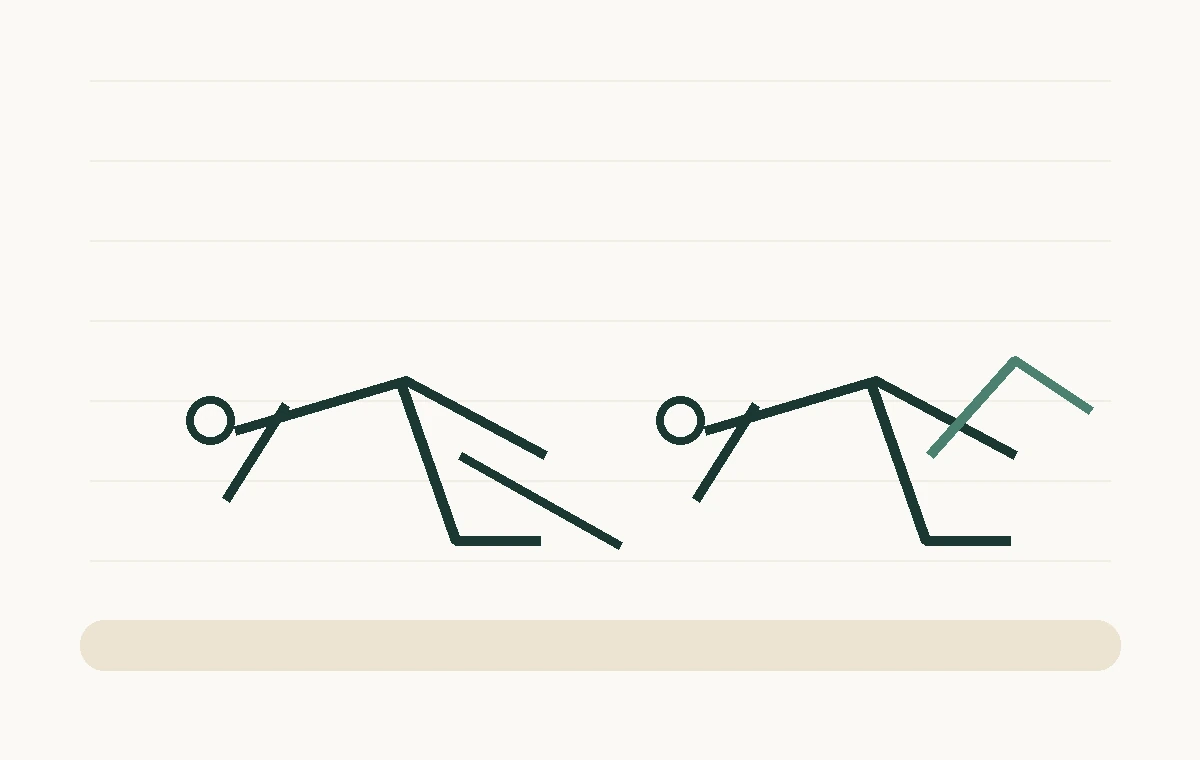
Image fit: close. The image shows a close bodyweight strength pattern used inside this workout family.
General adult education only. Stop if a movement feels sharp, unusual, or unsafe and ask a qualified professional when unsure.