Chair vs Bench for Home Workouts: Match the Support to the Move
Revised · General adult exercise education
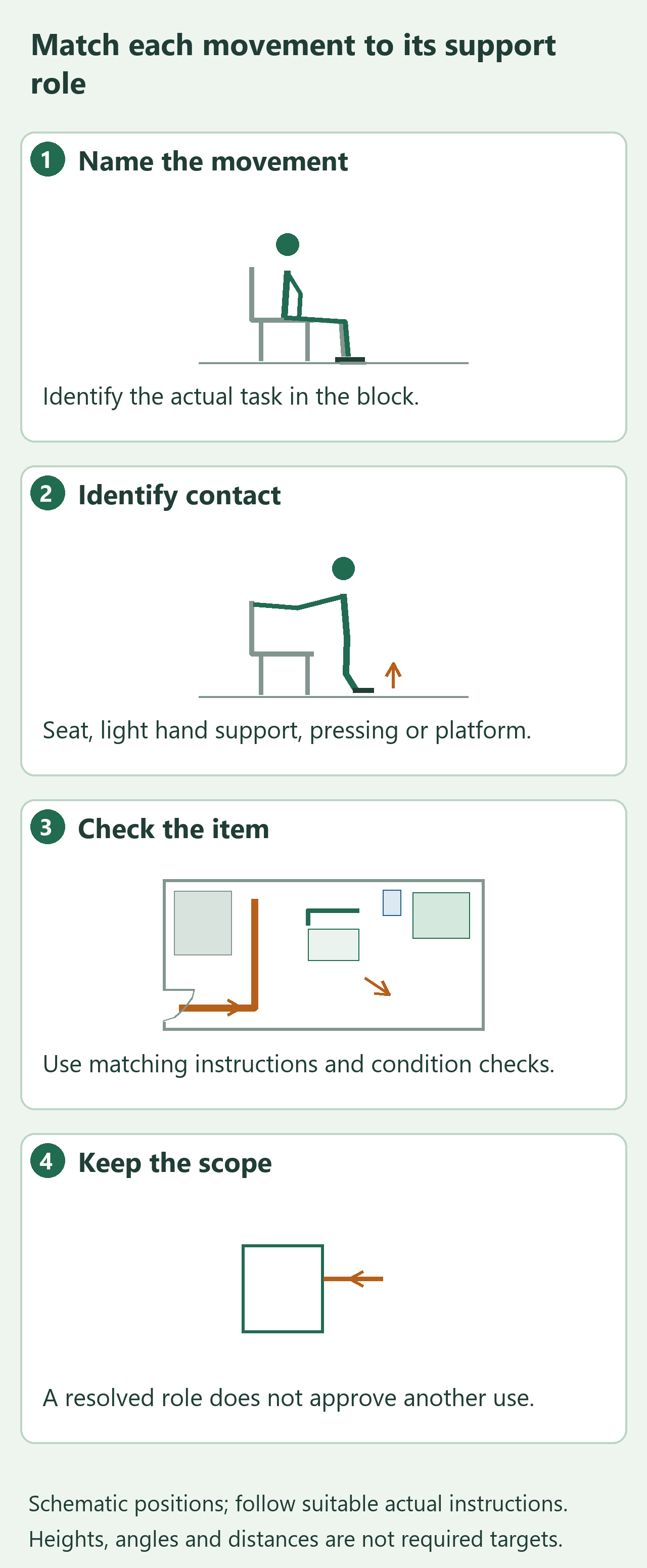
Read what each movement asks the support to do. Sitting on a chair, standing up from it, touching its back for stability and pressing against an edge are different uses. An ordinary chair, exercise bench and step platform are not interchangeable just because their heights look similar.
What job does the support do?
Start with the movement instructions, not the equipment label. “Chair workout” can describe seated movement, a sit-to-stand, or a standing exercise with hands resting on the chair back. It can also be used loosely for a mixed routine containing pressing or dips. Those blocks need different support decisions.
Write the contact used in the actual movement: seat under the body, chair to sit back onto, hands resting on a back, hands pressing through an edge, or feet stepping onto a platform. This makes the equipment question concrete before you choose repetitions or a timer.
This page compares those roles. The separate chair-selection guide checks the item itself, its instructions, fit, condition and floor contact in detail. A role comparison does not replace that inspection.
Compare the support roles in a home session
On a narrow screen, scroll this table sideways to read all columns.
| Movement role | What the support is used for | What needs confirming | A misleading shortcut |
|---|---|---|---|
| Seated movement | The seat supports you in the specified sitting position. | Suitable chair, seated fit, condition and movement clearance. | Calling a deep sofa or wheeled chair equivalent because both are seats. |
| Sit-to-stand | You begin seated and return to the chair under control. | The chair and surface stay suitable through the transitions. | Choosing a seat height only to make a planned count easier. |
| Standing hand support | The movement instructions describe hands resting on the chair back for stability. | The specified contact, position, chair and floor arrangement. | Turning light hand contact into leaning the whole body onto the back. |
| Incline pressing or dips | The hands apply force through a support during a different body-weight task. | A support intended and suitable for the actual exercise, with appropriate instructions. | Using an ordinary dining chair because its seat is at a convenient height. |
| Stepping or standing on a platform | The feet use an elevated surface as part of the exercise. | Appropriate platform equipment and guidance for that use. | Treating a chair seat as a step platform. |
The last two roles are not established by NHS's linked chair-based sitting and strength routines. Leave them out of an ordinary chair arrangement unless you have suitable equipment and instructions for the actual task. The table does not approve a particular chair, bench or platform.
Use NHS chair instructions in their own context
NHS strength guidance specifies a solid, stable chair without wheels that will not slip on its surface. It describes a seated position with feet flat and knees bent at right angles. NHS sitting guidance gives the same stable, non-wheeled starting requirement and advises checking suitability with a GP or a professional involved in your care when uncertain.
For sit-to-stand, the source describes sitting near the edge, leaning slightly forward, standing slowly using the legs and returning to sitting under control. For its mini-squats and calf raises, it describes hands resting on the chair back for stability. These are specific movement instructions, rather than permission for any activity that touches the chair.
NHS advises an armless chair for those routines because arms restrict movement. If you use prescribed armrests or another support to sit, stand or balance, do not discard it to copy an internet routine. Get appropriate individualized guidance about the movement and setup.
Follow the source for the movement you choose. A solid chair that fits sitting still needs its condition, floor contact and particular use checked. Fewer repetitions do not resolve a damaged frame or an unidentified folding mechanism.
What does an exercise bench add?
A purpose-built exercise bench may have instructions for particular exercise uses, adjustments and loads. Read the document for the actual model and configuration. “Exercise bench” is a category, not approval for every pressing, dipping, standing or stepping task.
Find the intended use, assembly and adjustment instructions, stated limits and maintenance requirements. If a relevant point is absent or unclear, resolve it with the manufacturer or appropriate instruction. Do not infer a permitted use from a product photograph or another bench with a similar shape.
A sitting capacity is not a general exercise rating. A number applies within its stated use and conditions; it does not establish a different direction of force, platform role or dynamic task. Conversely, choosing a suitable purpose-built support does not decide whether the exercise suits your health or current ability.
This comparison does not recommend products or ask you to buy a bench. A suitable wall or fixed pressing surface can serve a different task from the chair used for sitting. The useful decision is which appropriate movement and support you can establish, not which item looks most versatile.
Review a mixed workout one block at a time
Copy the movement names from the proposed session. Beside each one, write the support role and the instruction that establishes it. A list might contain sit-to-stand, seated hip marching and a wall press-up: chair seat, chair seat with the specified hand contact, then a separate wall setup.
Do not label all three “uses a chair.” The wall block needs suitable wall and floor contact; the seated blocks need the right chair and position. Another mixed list containing a dip or step-up would introduce a different equipment question.
On a narrow screen, scroll this table sideways to read all columns.
| Block to review | Support question | What to do if unresolved |
|---|---|---|
| Chair sit-to-stand | Can the specified seated and standing transitions be established with a suitable chair? | Resolve the chair or get appropriate movement guidance before that block. |
| Seated hip march | Can you sit upright with the required fit, hand contact and comfortable alternating movement? | Choose a suitable arrangement or obtain guidance; a floor crunch is not the same task. |
| Standing calf raise with hand support | Does the actual chair-back contact and floor arrangement match the instructions? | Resolve the setup; do not lean harder into uncertain furniture. |
| Wall or fixed-counter pressing | Is that separate pressing surface and its contact suitable? | Use appropriate pressing guidance or leave the block out while uncertain. |
The chair-supported session example and three-week chair calendar organize particular chair tasks. Check their actual movements rather than assuming that the title approves every support you own.
Choose a different task without inventing an equipment substitute
If pressing is the goal and an ordinary chair is the only proposed surface, read the wall, fixed-counter and floor comparison. It describes different appropriate support choices. A lower hand height is not a reason to use a surface that can slide or tip.
If a suitable chair-based task is what you want, read sit-to-stand and the selected seated instructions. Do not add a dip or step onto the seat merely to make the routine more demanding.
If your intended use remains uncertain, choose an appropriate alternative whose arrangement you understand or pause that block. Do not bounce, shove, stand on or lean hard into a chair or bench as a test. A brief attempt that happens not to move it does not approve another load or movement.
Putting furniture near a wall does not repair a loose joint, establish floor grip or create an intended exercise use. Follow any positioning direction for the actual movement while still resolving the item and surface requirements.
Keep the decision and its limits visible
Your note should name the movement, support role, actual item, matching instruction and anything unresolved. For example: “Chair for seated hip march; seated fit and condition to check; not selected for pressing or stepping.” That is more useful than “chair safe for workouts.”
Revisit the role when you change the movement. A record for sitting does not cover a newly added pressing block. Recheck relevant condition and contact when the item or surface changes.
Furniture choice also cannot assess a symptom or provide medical clearance. NHS's accompanying exercise safety advice says to seek professional guidance when suitability or relevant health circumstances are uncertain and to stop immediately for pain or becoming unwell. Another bench, chair or shorter block is not a remedy for that concern.
Match each movement to its support role
Examples to work through
These fictional examples illustrate practical choices and observations.
A sitting rating becomes a pressing claim
Bea finds a stated sitting capacity for her dining chair and wants to use its edge for incline pressing. She keeps the rating within its stated use and selects an appropriate pressing setup separately. A sitting number cannot establish the different movement.
One session uses two supports
Hugo’s plan contains seated hip marching and a wall press-up. He checks the chair for the seated task and the wall and floor contact for pressing. The session can use different supports without pretending they are interchangeable.
A familiar chair gains an unfamiliar block
Yasmin adds stepping onto the seat to an ordinary chair routine. She leaves that block out and uses appropriate equipment and guidance for any platform exercise. Familiar sitting use does not approve standing on the seat.
Prescribed support conflicts with a generic routine
Tessa depends on prescribed armrests during transitions. She obtains individualized exercise guidance rather than removing the support to copy an armless-chair suggestion. The routine’s movement-clearance advice does not replace her own support needs.
Chair, bench and movement-role comparison
Use these optional reminders to mark fields you want to keep in your own notes. The downloadable blank sheet contains every record field. Keep your completed record in your own appropriate private place.
Frequently asked questions
Can I use a dining chair instead of an exercise bench?
Compare the actual task and intended use. A suitable dining chair may fit specified seated or chair-based movements, but its sitting use does not approve pressing, dips or stepping. An exercise bench also needs its own model and configuration instructions.
Does a heavier chair make every movement acceptable?
Weight alone does not establish condition, contact, fit or intended use. Follow the actual movement and manufacturer requirements. Do not load-test uncertain furniture or treat a wall position as a repair.
Are chair-back support and incline pressing the same use?
NHS’s specified standing hand support describes hands resting on the back for stability. Pressing is a different body-weight task. Read the actual instructions and establish a suitable pressing surface separately.
Do I need to buy a bench to exercise at home?
This guide does not prescribe a purchase. Choose suitable movements and supports you can establish appropriately. A chair-based task, wall pressing task or another suitable activity can serve different purposes; use the actual instructions rather than a shopping label.
Sources and what they support
- NHS: Strength exercises
Stable chair and seated fit; sit-to-stand, supported calf raise and wall press-up descriptions, example counts and gradual build-up.
- NHS: Sitting exercises
Stable chair, seated fit and the upright single-leg hip march. Use its own movement instructions and suitability guidance.
- NHS: How to warm up before exercising
The specific standing warm-up takes at least six minutes and can be longer. The accompanying general exercise advice includes stopping for pain or becoming unwell and obtaining appropriate guidance when suitability is uncertain.
The diagrams, fictional cases, records and combined session calendars are original educational aids. The listed sources inform the specific guidance described above; they do not prescribe every example timing or assess your individual situation.